
You believe your content is a masterpiece.
You think the world owes you their undivided attention because you spent ten hours in the editing suite.
The reality is much more brutal.
Your audience has the attention span of a goldfish on a caffeine bender.
They do not care about your effort.
They care about their time.
If you cannot justify their investment within the first few seconds, they will vanish.
This is not a failure of your creativity.
It is a failure of your understanding of human biology.
The Neurology of the Bounce
The human brain is an energy-saving machine.
It is designed to filter out the noise.
When a viewer clicks a video, their brain enters a state of high-alert evaluation.
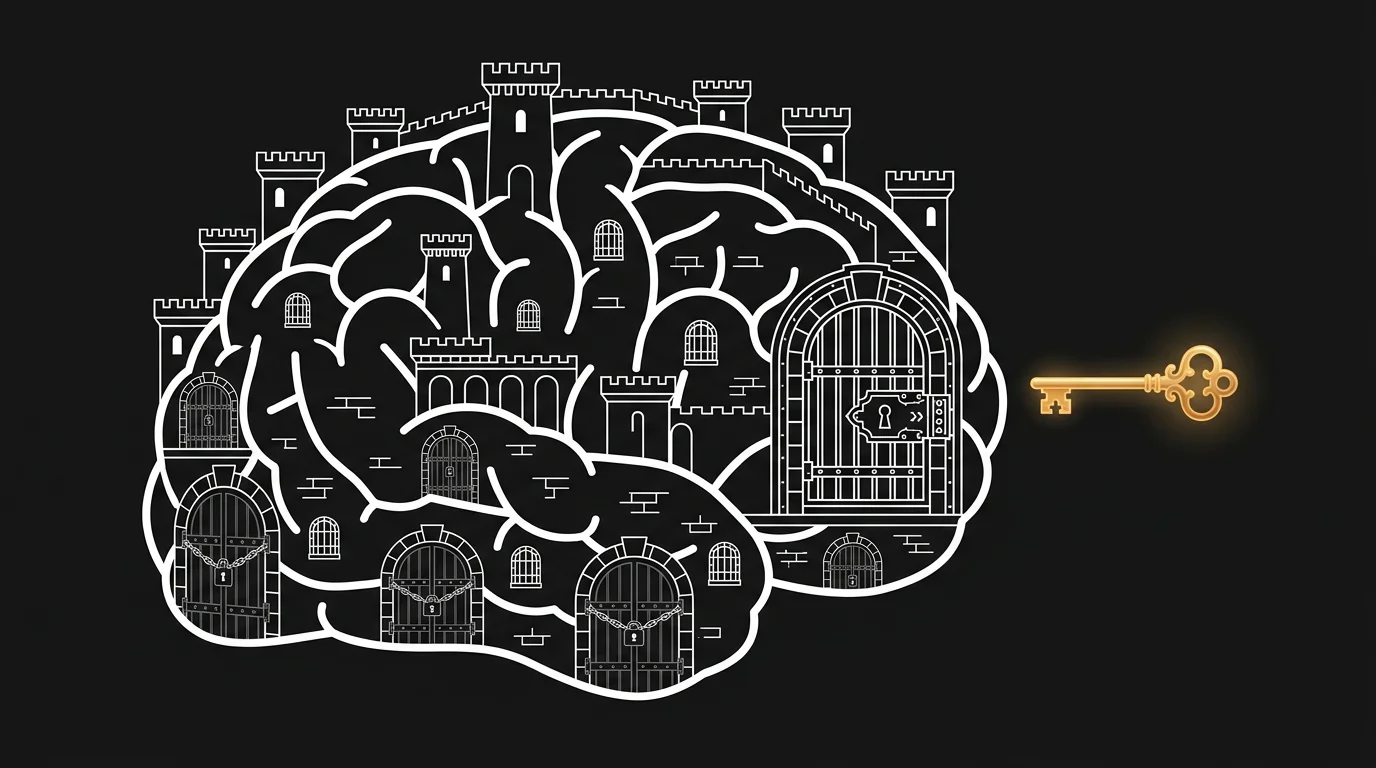
This is the Cognitive Gatekeeper.
The brain asks one question: "Is this worth the caloric burn required to pay attention?"
If the answer is no, the finger moves to the back button.
The pattern of rejection follows a specific hierarchy:
Visual Stimulus → Pattern Recognition → Expectation Match → Commitment.
If any part of this chain breaks, you lose the viewer.
The Survival Instinct of Relevance
Most creators argue over whether "Short Form" or "Long Form" is better.
They are both wrong.
The length is irrelevant.
The relevance is everything.
The Synthesis Hook tells us that viewers don't hate long intros.
They hate intros that provide zero value.
A 2-minute intro that builds suspense is better than a 5-second intro that is boring.
| Phase | Duration | Psychological Action |
|---|---|---|
| The Snap | 0-3 Seconds | Visual validation of the thumbnail promise. |
| The Hook | 3-10 Seconds | Establishing the emotional or intellectual "gap." |
| The Proof | 10-20 Seconds | Proving the creator is qualified to speak. |
| The Roadmap | 20-30 Seconds | Setting expectations for the remaining duration. |
The brain rejects anything that feels like a waste of metabolic energy.
The Four Pillars of Retention
To stop the bleed, you must master the mechanics of the first 30 seconds.
- Visual Velocity: The speed at which the frame or information changes.
- The Curiosity Gap: The distance between what the viewer knows and what they want to know.
- Micro-Wins: Small bursts of value or entertainment delivered immediately.
- Authority Signaling: Professionalism in audio and lighting that suggests high-quality information.
 illustration
Why Your Intro is Killing Your Channel
You likely start your videos with a generic greeting.
"Hey guys, welcome back to the channel."
This is a death sentence.
You are treating your audience like friends before you have earned their respect.
The viewer's ego is massive.
They want to know what you can do for them.
They do not care about your morning coffee or your social media handles.
The Curse of the "Slow Burn"
Many creators believe in "saving the best for last."
In the digital economy, this is a strategic suicide.
If you don't show the "best" in the first ten seconds, no one will be there for the finish.
You must front-load the value.
Front-loading is the act of giving the viewer a "teaser" of the climax to build a psychological contract.
Emotional Resonance and Cognitive Load
There is a balance between being exciting and being exhausting.
If your video is too loud and fast, the viewer experiences Sensory Overload.
If it is too slow, they experience Cognitive Underload.
Both lead to the same result: a click away.
The Progression Ladder of viewer engagement looks like this:
Boredom → Interest → Engagement → Investment.
You cannot skip a step.
You cannot ask for investment before you have triggered interest.
The Mirror Neuron Effect
Humans are wired to react to other humans.
If you look bored in your own video, the viewer will feel bored.
If you look anxious, the viewer will feel uncomfortable.
High-level creators utilize Emotional Mirroring.
They project the exact state of mind they want the viewer to adopt.
If the video is about a mystery, the creator looks intrigued.
If it is a tutorial, the creator looks confident.
Your face is the primary data point for the viewer's emotional mirror.
 illustration
The "Open Loop" Strategy
The most powerful tool in your psychological arsenal is the Zeigarnik Effect.
This is the human tendency to remember uncompleted tasks better than completed ones.
When you start a video, you must open a "loop" in the viewer's mind.
You present a problem that needs a solution.
You ask a question that needs an answer.
You show a result that needs an explanation.
The viewer stays because the brain hates an open loop.
It creates a mild form of psychological tension.
The only way to resolve that tension is to finish the video.
Mastering the First 10 Seconds
- Stop the Scroll: Use a visual that matches the thumbnail perfectly.
- State the Stakes: Explain exactly what will happen if they stop watching.
- Validate the Click: Let them know they are in the right place.
- Remove Friction: Cut every unnecessary word.
The first ten seconds are a sprint to keep the viewer from walking away.
Data-Driven Retention Analysis
You must stop guessing and start looking at the graphs.
Every dip in your retention curve is a moment where you failed the viewer.
Look for the "Cliff."
A cliff is a sharp drop in viewership within the first 30 seconds.
This usually happens because of:
False Promises → Bad Audio → Long Logos → Repetitive Information.
If your curve looks like a slide, your pacing is the problem.
If it looks like a cliff, your intro is the problem.
| Symptom | Cause | Solution |
|---|---|---|
| Sharp Drop (0-5s) | Thumbnails don't match content. | Align visual expectations. |
| Steady Decline (5-30s) | Too much "fluff" or talking. | Increase information density. |
| Flatline | High engagement. | Maintain current pacing. |
| Spikes | Re-watched segments. | Analyze and replicate that moment. |
The retention graph is a map of your audience's boredom.
The Power of the "Pattern Interrupt"
The brain is excellent at ignoring patterns.
If your video stays the same for 30 seconds, the brain tunes out.
You need a Pattern Interrupt.
This is a sudden change in the visual or auditory environment.
It can be a camera angle change.
It can be a sound effect.
It can be a text overlay.
Every time the pattern breaks, the brain "refreshes" its attention.
Professional editors aim for a pattern interrupt every 3 to 7 seconds.
This is not "over-editing."
This is "attention management."
High-Concept Philosophy vs. Low-Brow Execution
You want to make deep, meaningful content.
That is noble.
But you cannot feed a baby a steak.
You must blend your high-level ideas with "dirt-simple" delivery.
Use metaphors that a child would understand to explain concepts that a scientist would respect.
Use common imagery to ground your abstract theories.
If you are talking about "The Psychology of Retention," talk about "The Goldfish Brain."
If you are talking about "Cognitive Load," talk about "A Full Trash Can."
The more complex the idea, the simpler the imagery must be.
 illustration
Conclusion: The Contract of Attention
Retention is not a trick.
It is a contract.
The viewer gives you their time.
You give them a transformation.
If you break that contract in the first 30 seconds, you deserve to lose them.
The psychology is clear.
The human brain is ruthless in its pursuit of value.
Stop making videos for yourself.
Start making videos for the "Cognitive Gatekeeper."
If you can bypass the gate, you can win the mind.
Master the first 30 seconds, or the rest of your video does not exist.