
How MrBeast Uses Pattern Interrupts Every 4 Seconds
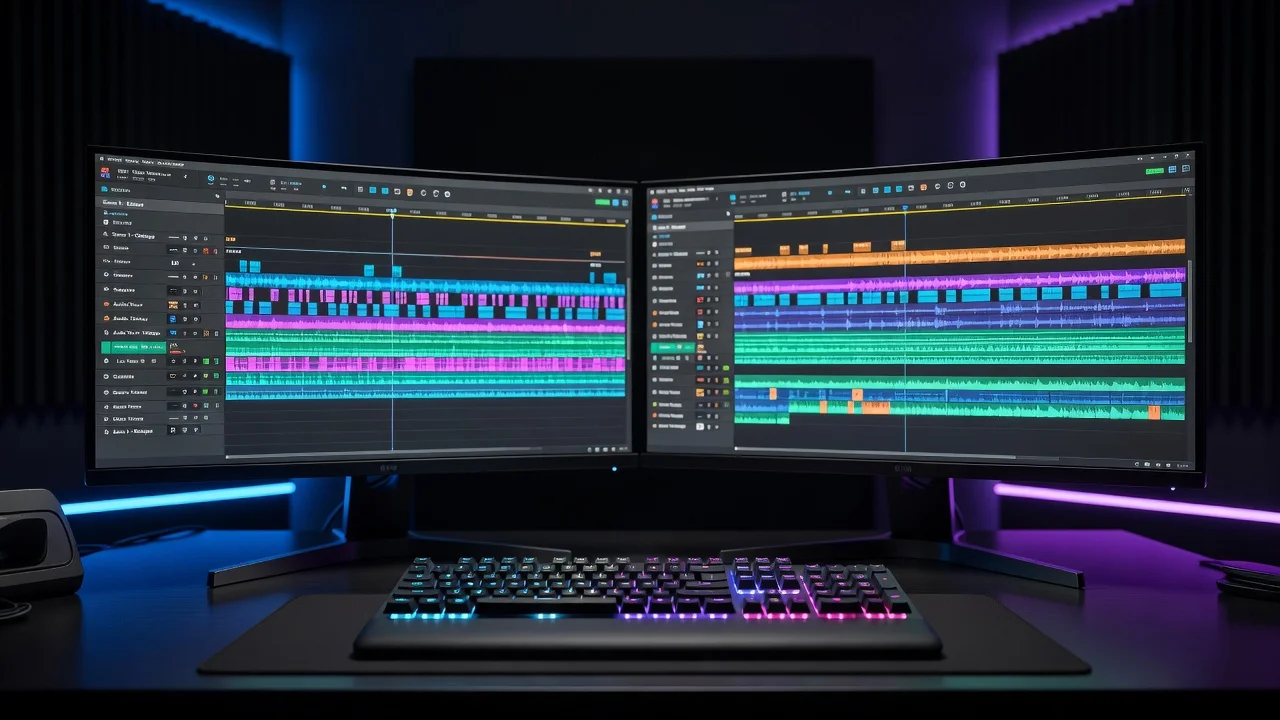
Jimmy Donaldson built an empire on human attention. As the most subscribed individual creator on YouTube, his videos routinely cross the 100-million-view threshold within days of publication. While massive budgets, philanthropic stunts, and elaborate sets get the credit, the actual mechanism keeping viewers from clicking away is much more mechanical. It comes down to a relentless, mathematically precise editing strategy.
If you study his audience retention graphs, the secret to his pacing becomes obvious. The core engine driving this retention is the MrBeast pattern interrupt. By changing the visual or auditory stimulus on screen approximately every three to four seconds, his videos continuously reset the viewer's attention span, making it physically difficult to look away.
Understanding how this works requires breaking down the timeline, the psychology of boredom, and the specific audiovisual tools his team uses to manipulate focus.
The Anatomy of a Pattern Interrupt
A pattern interrupt is an unexpected action, sound, or visual change that breaks a person's current cognitive loop. Originating in neuro-linguistic programming (NLP) and behavioral psychology, the technique was initially used by therapists to break clients out of negative thought cycles, and later by salespeople to bypass knee-jerk rejections.
In the context of video editing, a pattern interrupt is any shift that prevents the brain from predicting what happens next. When the brain can easily predict the next few seconds of a video, it disengages. The viewer gets bored and clicks a recommended thumbnail in the sidebar.
To prevent this, editors inject new stimuli to force the brain to re-evaluate the scene.
The 4-Second Rule
Watch any recent major YouTube upload from a top-tier creator and count the seconds between cuts, camera angle changes, or significant on-screen events. In a standard vlog or educational video, a single shot might hold for 10 to 15 seconds. In television dramas, shots can last much longer.
In a MrBeast video, a shot rarely lasts longer than four seconds. Often, it is much faster.
This hyper-paced editing style targets the baseline human attention span in a digital environment. By swapping the stimulus before the viewer's brain fully acclimates to the current shot, the video creates a continuous string of micro-engagements.
| Content Type | Average Hold Time per Shot | Primary Retention Driver |
|---|---|---|
| Traditional Cinema | 12 - 20 seconds | Narrative tension, character dialogue |
| Standard YouTube Vlog | 8 - 15 seconds | Personality, topic interest |
| TikTok / Short Form | 1 - 3 seconds | Immediate visual payoff, trendy audio |
| MrBeast Main Channel | 2 - 4 seconds | High-stakes pattern interrupts |
This rapid-fire pacing requires an immense amount of source footage. A 15-minute video might contain over 300 distinct cuts. To sustain this, the production team uses multiple cameras rolling simultaneously on every scene, ensuring the editor always has an alternate angle to cut to when the four-second timer runs out.
The Visual Toolkit
Pattern interrupts are not just simple jump cuts. A jump cut—cutting forward in time within the same camera angle to remove dead space—is standard practice across YouTube. MrBeast's team uses a much wider visual vocabulary to jolt the viewer's eyes.
Dynamic Camera Angles and Movement
A standard scene features a wide shot to establish the setting, a medium shot for dialogue, and a close-up for reactions. Fast-paced retention editing cycles through these rapidly. If a contestant is talking, the camera might cut from a full-body shot to an extreme close-up of their face mid-sentence.
If multiple cameras aren't available, editors simulate this movement digitally. They scale the 4K footage up to 110% or 120% and manually keyframe sudden digital zooms or pans. The frame is rarely static. Even during a simple explanation, the camera is slowly pushing in, building subconscious urgency.
On-Screen Text and Typography
Subtitles are no longer just for accessibility; they are pacing tools. You will rarely see a full sentence appear on screen at once. Instead, the text appears word-by-word or phrase-by-phrase, perfectly synced with the speaker's cadence.
- The text is highly stylized, usually with thick strokes or drop shadows.
- Key words are highlighted in bright colors (yellow, green, red) to match the emotion.
- The text physically moves, popping on screen with a slight bounce effect or tracking the movement of a person's head.
This forces the viewer's eyes to actively track the center of the screen, essentially reading the video while watching it.
B-Roll and Cutaways
When the primary footage is just people talking, the video immediately cuts to B-roll showing what they are talking about. If someone says, "We bought a private island," the video instantly shows a sweeping drone shot of the island, rather than letting the person finish the paragraph on camera. These cutaways provide visual evidence of the stakes and break up the visual monotony of human faces.
Motion Graphics and Visual Effects
Arrows, circles, and countdown timers frequently appear to highlight specific elements in the frame. If a challenge involves a time limit, a massive digital clock will periodically slam onto the screen. If a contestant drops an item, a cartoonish red arrow might point to it. These graphics act as visual anchors, telling the audience exactly what matters in that specific fraction of a second.

The Audio Toolkit
Visuals only account for half of the retention equation. The audio design in a high-retention video is arguably more complex than the video timeline. Audio pattern interrupts bypass the eyes entirely, tapping directly into the brain's auditory processing centers to create emotional spikes.
The Subconscious Soundscape
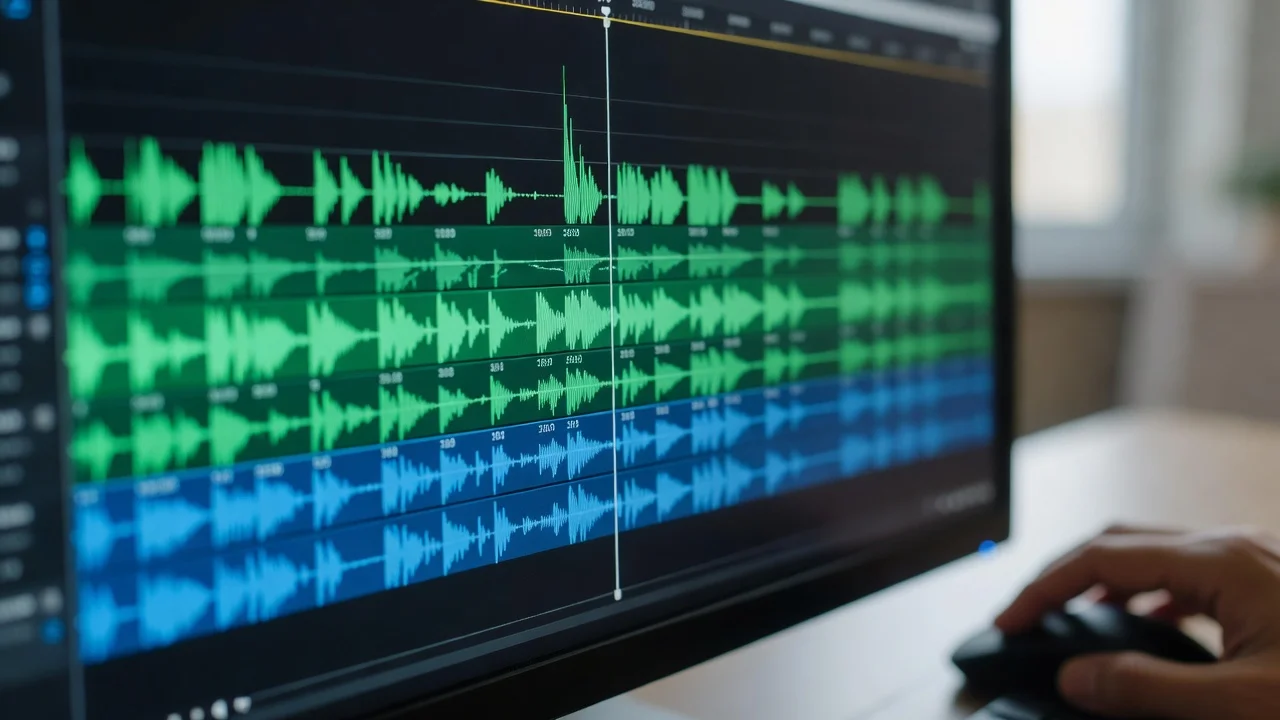
Every visual change is accompanied by an audio cue. When text pops on screen, there is a subtle "pop" or "whoosh." When the camera zooms in digitally, there is a low-frequency riser or a sudden bass drop.
These sound effects (SFX) are layered heavily. A single two-second transition might feature five different audio tracks:
- The primary dialogue clip.
- A fast-paced background music track.
- A "swoosh" effect for the camera movement.
- A "ding" for the on-screen text.
- An ambient room tone track to glue it together.
Music as a Narrative Metronome
Background music does not just play passively. It dictates the emotion and the pacing of the scene, and it changes frequently. A 15-minute video might use 20 different music tracks.
When explaining rules, the music is upbeat, staccato, and driving. When a contestant faces a difficult choice, the music cuts out entirely, leaving a tense drone or absolute silence. This sudden absence of sound is a powerful pattern interrupt. The brain notices the silence immediately, creating a vacuum of anticipation before the next loud event.
Volume Modulation
Editors intentionally spike the audio levels during high-energy moments. Shouting, cheering, or loud crashes are compressed and boosted to hit the maximum safe decibel limits. This varying dynamic range prevents the audio from becoming white noise.
Narrative and Structural Interrupts
You can only hold attention with fast cuts and loud noises for so long. Eventually, sensory fatigue sets in. To maintain engagement over 15 to 20 minutes, the interrupts must transition from purely sensory tactics to narrative twists.
Micro-Stakes and Open Loops
A standard video establishes a massive goal at the beginning (e.g., "Last to leave the circle wins $500,000"). If the video only relied on that one goal, viewers would skip to the end. To prevent skipping, the script introduces micro-stakes every few minutes.
These are smaller, immediate challenges nested within the main premise.
- "For the next hour, you cannot use your hands."
- "The floor is now lava; if you touch it, you lose $10,000 of your potential prize."
- "We are dropping a giant weight on your shelter in five minutes."
Each micro-stake opens a new psychological loop. The viewer stays to see how the contestant handles the immediate problem, and by the time that loop closes, another one has already opened.
Changing the Rules
Just as viewers settle into the rhythm of a challenge, the rules alter. A contestant might be offered a guaranteed smaller cash prize to quit immediately, creating a psychological dilemma. These format breakers ensure the middle of the video does not sag. The viewer cannot predict the trajectory of the game, so they must watch the entire progression.
Case Study: The First 30 Seconds
The highest drop-off rate for any YouTube video occurs in the first 30 seconds. If you fail to hook the viewer immediately, the algorithm registers the video as low-quality and stops recommending it. Let's break down how pattern interrupts function in a hypothetical—but structurally accurate—opening sequence.
| Time | Visual Action | Audio Action | Psychological Effect |
|---|---|---|---|
| 0:00 | Wide shot of massive set. Jimmy yells the core hook. | Loud impact sound, upbeat music starts immediately. | Establishes the scale and the promise of the thumbnail. |
| 0:03 | Cut to extreme close-up of a contestant looking shocked. | Record scratch, music stops, heartbeat sound effect. | Breaks the initial energy, introduces human stakes. |
| 0:05 | Fast digital zoom on the prize cash. Bright yellow text pops up: "$1,000,000". | Heavy bass drop, cash register "cha-ching" sound. | Re-establishes the core motivation with high sensory input. |
| 0:08 | Quick montage (3 shots, 1 second each) of crazy moments from later in the video. | Fast riser sound effect peaking at the end of the montage. | Opens multiple narrative loops (teasing the future). |
| 0:11 | Cut back to Jimmy explaining the first rule. Camera is slowly pushing in. | Upbeat music resumes, subtle whooshes on text. | Grounds the viewer back in the present timeline. |
| 0:15 | Drone shot flying over the set to show the scale. | Wind sound effect, spatial audio shift. | Visual reset to prevent claustrophobia from close-ups. |
In just 15 seconds, the video has changed camera angles or scenes at least eight times, manipulated the music three times, and introduced the core premise, the stakes, and teasers for the climax.
The Neuroscience of Viewer Retention
Why does this specific pacing work so effectively on the human brain? The answer lies in the dopamine reward system and the brain's orientation reflex.
The orientation reflex is an automatic physiological response to a change in the environment. From an evolutionary standpoint, noticing sudden movements or new sounds was crucial for survival. When a video cuts to a new angle, flashes bright text, or plays a sudden sound effect, it artificially triggers this reflex. The brain automatically allocates attention to the new stimulus to determine if it is important.
Simultaneously, the video's pacing manipulates dopamine release. Dopamine is not just a pleasure chemical; it is the neurotransmitter responsible for anticipation and motivation. By constantly opening new narrative loops and delivering rapid visual payoffs, the video creates a continuous drip of dopamine.
The viewer enters a state of flow where the friction of continuing to watch is lower than the friction of clicking away. The cognitive load required to process the rapid stimuli leaves very little mental bandwidth available to think, "Should I do something else right now?"
Can Independent Creators Replicate This?
A common frustration among independent video creators is the assumption that high retention requires a multi-million-dollar budget and a team of 10 editors. While the massive sets and cash prizes are out of reach for most, the underlying mechanics of the pattern interrupt are budget agnostic.
You do not need to give away a private island to change your camera angle every four seconds.
Practical Implementation for Small Channels
- Shoot in 4K, Edit in 1080p: This is the easiest way to create fake multi-camera setups. By placing 4K footage on a 1080p timeline, you can scale the footage up to 200% without losing quality. This allows you to cut from a wide shot to a tight close-up using a single camera file.
- Master Keyframing: Learn how to keyframe scale and position in your editing software. A slow, continuous 5% push-in over a 10-second clip keeps the screen dynamic.
- Build an SFX Library: Collect high-quality whooshes, risers, impacts, and UI sounds. Organize them by energy level. Apply them generously to any text or graphic that appears on screen.
- Use J-Cuts and L-Cuts: Do not cut audio and video at exactly the same time. Let the audio of the next clip start slightly before the video cuts (J-cut), or let the audio of the previous clip linger over the new video (L-cut). This smooths out the aggressive pacing and keeps the viewer engaged across the edit.
The Retention Checklist
Before exporting a video, run through a timeline audit using this framework:
- Does the first 5 seconds physically show what the title and thumbnail promised?
- Is there a visual change (cut, zoom, graphic, text) at least once every 5 seconds?
- Are there long blocks of uninterrupted speech that could be covered with relevant B-roll?
- Does the background music change to match the shifting emotional tone of the content?
- Have all unnecessary pauses, breaths, and "umms" been removed from the audio track?
The Evolution of the Strategy
The hyper-paced editing style pioneered by Jimmy Donaldson completely reshaped the creator economy. For several years, "YouTube editing" became synonymous with screaming, exploding text, and relentless jump cuts. Every creator in the gaming, challenge, and lifestyle niches adopted the 4-second rule.
However, audience tastes are not static. While the mechanical application of pattern interrupts remains highly effective for maximizing initial engagement, total sensory overload has a ceiling.
Viewer Fatigue and the Shift to Storytelling
When every video on the platform flashes colors and screams for attention every three seconds, the tactic loses some of its novelty. Viewers develop a tolerance to the stimuli.
In recent years, top creators—including MrBeast himself—have begun subtly adjusting their pacing. While the fast cuts remain in the crucial opening hook, the middle sections of longer videos are allowing for more breathing room. The focus is shifting slightly from pure sensory interrupts to narrative pacing. The holds on emotional moments are longer. The emphasis is moving toward building genuine character arcs for the contestants rather than just throwing visual noise at the screen.
The core philosophy, however, remains unchanged: respect the viewer's time, remove all friction, and never give them a reason to leave.
A slow, poorly paced video will still fail immediately. The new challenge for editors is figuring out how to maintain the psychological grip of the 4-second rule while allowing the narrative to feel organic rather than manufactured.
Conclusion
The success of the MrBeast retention strategy proves that audience engagement is a measurable, manipulable science. By utilizing visual shifts, audio cues, and narrative micro-stakes every few seconds, a creator can effectively hijack the brain's orientation reflex and hold attention indefinitely.
Applying these pattern interrupts does not require immense wealth; it requires a deep understanding of pacing and a willingness to brutally trim any second of footage that does not actively serve the viewer. As the platform evolves, the creators who win will be those who master the delicate balance between high-speed sensory engagement and compelling, long-form storytelling.
Keep reading
Kurzgesagt's Existential Hook: Optimistic Nihilism as a Branding Strategy
Learn how Kurzgesagt pairs colorful animation with cosmic dread to build one of the most loyal audiences on YouTube.
Mark Rober's Engineering Paradox: Making Complex Physics Feel Like a Toy Commercial
Learn how Mark Rober tricks millions of viewers into learning college-level physics by packaging mechanical engineering as high-stakes entertainment.
The Psychology Behind Why Viewers Click Away in the First 30 Seconds
Discover the cognitive triggers that cause viewers to abandon video content and learn the retention strategies to fix your audience drop-off.