
Mark Rober's Engineering Paradox: Making Complex Physics Feel Like a Toy Commercial
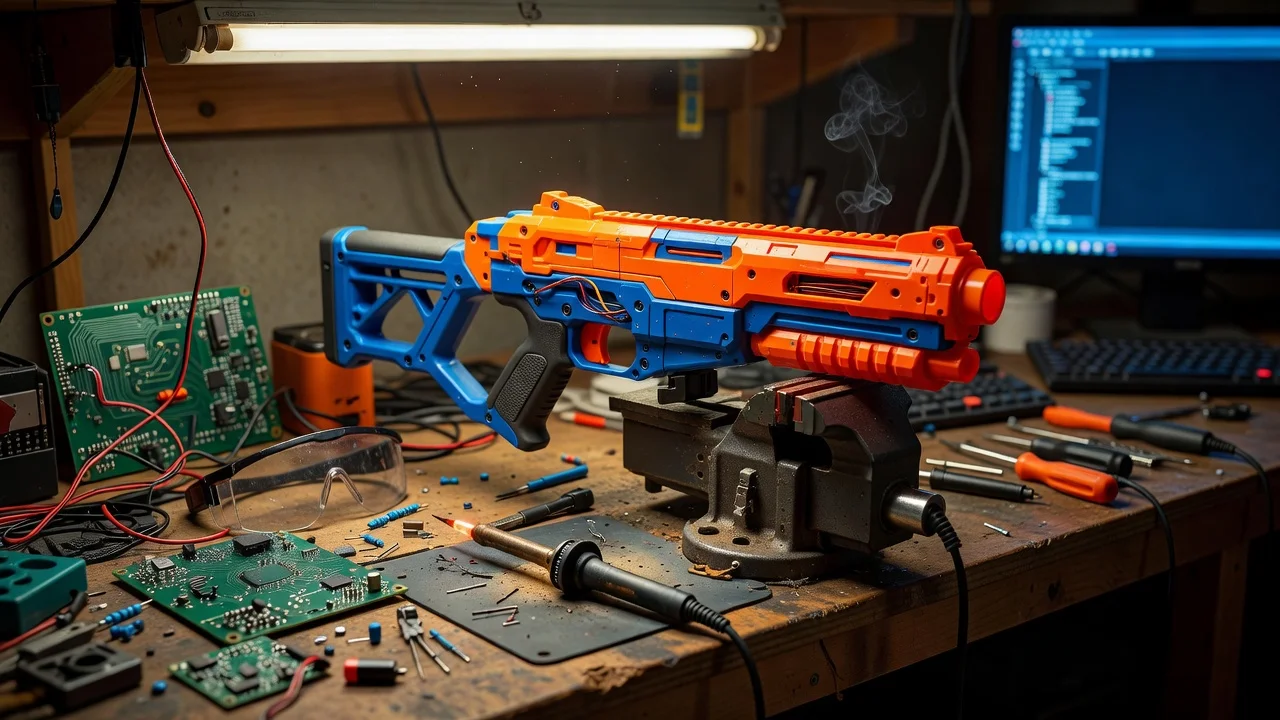
Mark Rober builds squirrel obstacle courses and glitter-spraying revenge boxes. You click his thumbnail expecting to watch porch pirates get sprayed with fart spray. Ten minutes later, you find yourself taking mental notes on centrifugal force, custom printed circuit board design, and the aerodynamics of a falling package.
This is Mark Rober's engineering paradox. He takes the driest, most complex mechanical engineering concepts and wraps them in the unmistakable packaging of a Saturday morning toy commercial.
People do not go to YouTube looking for a physics lecture. They go looking for a spectacle. Rober delivers the spectacle first. He earns your attention with a massive, absurd premise. Once you are hooked, he locks the classroom door and starts teaching. The brilliant part is that you never feel like you are doing homework.
Here is how a former NASA engineer turned YouTube into the largest physics classroom on the planet.
The Trojan Horse of Fun
Traditional education starts with the theory and eventually gets to the application. You spend three weeks learning formulas on a chalkboard before you finally drop a ball off the gym bleachers. Rober reverses this entirely.
He starts with the wildest possible application. He builds the world's largest Nerf gun or a liquid sand hot tub. He shows you the glorious, slow-motion result in the first thirty seconds. Once your brain demands to know how this impossible thing exists, he introduces the theory.
Let us look at how he disguises his syllabus.
| The Clickbait Hook | The Hidden Educational Syllabus |
|---|---|
| Glitter Bomb vs. Porch Pirates | Cellular telemetry, GPS tracking, custom PCB manufacturing, centrifugal force. |
| Liquid Sand Hot Tub | Fluid dynamics, air pressure, friction, material science. |
| World's Largest Jell-O Pool | Thermodynamics, boiling points, structural engineering, heat transfer. |
| Backyard Squirrel Maze | Behavioral psychology, agility mechanics, iterative design process. |
| Stealing Baseball Signs | Machine learning, smartphone camera sensors, algorithmic prediction. |
If Rober titled his video "An Introduction to Fluid Dynamics," it would get fifty thousand views from engineering students. By titling it "Liquid Sand Hot Tub," he gets fifty million views from everyone. The core science does not change. The packaging does.
Physical Props Over Digital Assets
Most educational creators rely heavily on digital motion graphics. When they need to explain a complex mechanism, they cut to an After Effects animation. This works, but it feels sterile. It reminds the viewer of a corporate training video.
Rober takes a different route. When he needs to explain how a lock works or how a gear ratio multiplies force, he builds a massive wooden model. He paints it in bright primary colors. He physically manipulates the pieces with his hands.
This tactile approach does two things. First, it triggers childhood nostalgia. Giant wooden gears look like oversized Lego bricks or Tinkertoys. Second, it proves the concept exists in the real world. A digital animation can cheat the laws of physics. A physical model cannot.
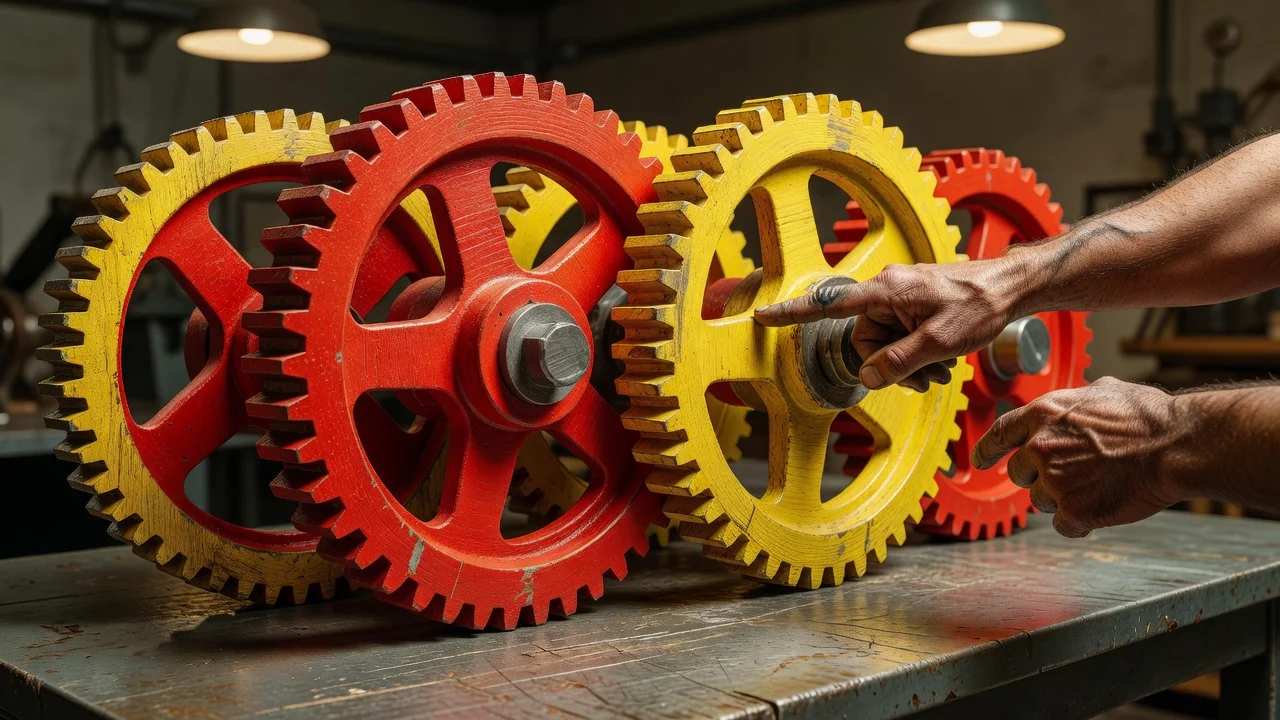
This commitment to physical reality shares DNA with The Visual Grammar of Casey Neistat's B-Roll Cuts. Neistat cuts out paper letters and tapes them to walls instead of adding digital text. Rober builds giant plastic valves instead of animating them. Both creators know that viewers crave physical texture in a digital medium.
Dropping the Blueprints
When Rober explains the math behind his builds, he often overlays simple, hand-drawn schematics directly onto the physical object. He will point to a custom spring mechanism, and a glowing blue outline will trace over the metal.
He simplifies the math. He does not show you the entire equation. He shows you the variables that matter right now. If speed and weight are the only things changing the outcome, he removes everything else from the screen. He treats math like a video game stat bar. You do not need to know the underlying code to know that a bigger health bar means a stronger boss.
The Engineering Design Process as a Movie Plot
Every Mark Rober video follows the exact same narrative structure. It is not an accident. He maps the traditional Engineering Design Process (EDP) directly onto the three-act structure of a Hollywood heist movie.
Here is the blueprint:
- The Impossible Goal (Define the Problem): Rober announces a ridiculous objective. He wants to hit a golf ball so hard it breaks the sound barrier.
- The Brainstorm (Do Background Research): He consults experts. He visits a lab or talks to a fellow scientist. He establishes the stakes and the rules of physics he has to beat.
- The First Prototype (Specify Requirements): He builds a smaller, safer version. It usually works, but it lacks the necessary scale to achieve the impossible goal.
- The Escalation (Create Alternative Solutions): He scales it up. This is where he introduces heavy machinery, custom parts, and dangerous materials.
- The Catastrophic Failure (Test and Evaluate): The giant machine breaks. A part snaps. The timeline is ruined. This is the lowest point in the narrative arc.
- The Redesign (Communicate Results): He figures out exactly why it failed. He explains the physics behind the failure to the audience. He builds a stronger, better part.
- The Grand Finale (Final Solution): The machine works perfectly in glorious 10,000 frames-per-second slow motion.
The most important step in this sequence is the failure.
Why Failure is Required
If Rober built a perfect machine on the first try, the video would be boring. The failure provides the dramatic tension. It proves the goal is actually difficult.
More importantly, failure is the best teacher. When the first Glitter Bomb motor stalled out, Rober had to explain torque and battery drain to the audience so they understood why he was upgrading the power supply. The audience learns the physics because they are emotionally invested in the success of the machine. They need the machine to work so they can see the porch pirate get blasted. Therefore, they care about the torque specifications of a tiny electric motor.
Mastering the Pacing of Science
You cannot hold an audience for twenty minutes on YouTube without aggressive pacing. Educational content usually suffers here. A teacher will spend five minutes setting up a single concept.
Rober treats his educational segments like action sequences. He uses fast cuts, loud sound effects, and constant visual changes. If you look closely, you will see a lot of overlap with How MrBeast Uses Pattern Interrupts Every 4 Seconds.
Rober uses a specific set of tools to keep the pace moving:
- The Voiceover Drive: He rarely speaks directly to the camera for more than ten seconds. The vast majority of his videos use fast-paced voiceover layered on top of active B-roll.
- The Soundtrack Shift: When the engineering gets complicated, the music drops out entirely. When a test is successful, an upbeat, triumphant track kicks in.
- The Time-Lapse: He compresses weeks of boring construction into five seconds of hyper-speed footage, accompanied by a catchy beat.
He respects the viewer's time. He cuts out every single frame that does not advance the plot or explain the science.
Tracking the Explosion
When you build content this highly engineered, the launch day matters. Rober drops videos infrequently. He spends months on a single project. When a new video goes live, the influx of traffic is immediate and massive.
Creators operating at this scale treat publishing like a live event. The first few hours dictate the trajectory of the video for the next five years. Tracking that initial burst of attention requires the right tools. If you are launching a major project, you can monitor the immediate impact using the YouTube Live View Counter. Watching the velocity of those early views tells you if the algorithm has picked up the hook.
Similarly, these massive event-style videos bring in waves of new subscribers. A single viral success can shift a channel's baseline permanently. Creators track this growth spike in real time through tools like the YouTube Live Subscriber Counter.
Data Visualization for the Masses
Numbers are boring. Spreadsheets make people click away. Rober knows this, so he turns data visualization into a physical sport.
When he needs to show the difference in bite force between a shark and a human, he does not show a bar graph. He builds two metal jaws and uses them to crush watermelons. The viewer remembers the exploding fruit long after they forget the exact PSI measurement.
If you are a creator trying to explain complex data, steal his checklist:
- Replace numbers with recognizable objects. Do not say "10,000 pounds of force." Say "the weight of three pickup trucks."
- Use physical destruction to show scale. Crushing a can shows a little force. Crushing a bowling ball shows a lot.
- Make the graph move. If you must use a digital chart, make it fill up like a progress bar in a video game. Add sound effects to every tick mark.
- Put a human in the danger zone. Stand next to the massive object to show just how big it is. Scale means nothing without a human reference point.
{{{ Overhead shot of dozens of bright blue and green hardhats arranged in a bar graph formation on a concrete floor, a yellow tape measure stretched across the bottom axis, dramatic side-lighting casting long shadows, deep industrial color palette, Photorealistic, highly detailed, 8k resolution, natural lighting, sharp focus, professional photography, DSLR quality }}}
The Toy Commercial Aesthetic
Look at the color grading in a Mark Rober video. Everything pops. The blues are deep, the reds are bright, and the lighting is even. It looks like a high-end commercial for Nerf or Hot Wheels.
This aesthetic choice is deliberate. Science gets a bad reputation for being sterile. Laboratories are white, grey, and stainless steel. Classrooms are beige. Textbooks are monochromatic.
Rober injects color back into engineering. He spray-paints his PVC pipes bright orange. He dyes his water neon green. He wears a brightly colored California hat in every shot.
This visual style lowers the barrier to entry. It tells the viewer, "This is safe. This is fun. You do not need a degree to understand this." By dressing up a dangerous, high-pressure physics experiment in the colors of a playground, he disarms the viewer's natural intimidation.
Creating the "I Can Do That" Feeling
The ultimate goal of a toy commercial is to make the kid watching believe they can replicate the fun at home. Rober achieves this same feeling with engineering.
He frequently uses common household items in his initial prototypes. He buys materials from Home Depot. He secures things with duct tape and zip ties. Even though the final build might require a $10,000 custom CNC machine, he makes sure the foundational concept relies on things you can find in your garage.
He wants you to believe that engineering is accessible. It is just problem-solving with hot glue and cardboard, scaled up over time.
Applying the Rober Method to Any Niche
You do not need to build glitter bombs to use this framework. The paradox works in any complicated niche.
If you make videos about personal finance, stop starting with spreadsheet tutorials. Start with someone trying to buy a Ferrari with pennies. Hook them with the absurdity, then teach them about compound interest.
If you are a coding channel, do not start with line-by-line syntax. Build an AI that automatically orders pizza when you yell at your computer. Show the pizza arriving first. Then explain the API integration.
The formula is simple but hard to execute:
- Pitch a crazy idea.
- Show the stakes.
- Fail publicly.
- Explain the boring technical details as the only way to solve the failure.
- Deliver the explosive payoff.
Mark Rober proved that audiences have an unlimited appetite for education. The problem was never the subject matter. The problem was the packaging. When you treat your classroom like a toy commercial, millions of people will gladly show up for the lecture. Stop lecturing. Start building.
Keep reading
Kurzgesagt's Existential Hook: Optimistic Nihilism as a Branding Strategy
Learn how Kurzgesagt pairs colorful animation with cosmic dread to build one of the most loyal audiences on YouTube.
How MrBeast Uses Pattern Interrupts Every 4 Seconds
Discover the precise editing techniques, psychological triggers, and pacing strategies Jimmy Donaldson uses to keep millions of viewers glued to the screen.
The Psychology Behind Why Viewers Click Away in the First 30 Seconds
Discover the cognitive triggers that cause viewers to abandon video content and learn the retention strategies to fix your audience drop-off.